Why Budapest Beats London
I used to be one of those English people. The kind who innocently and proudly believed, without much reflection, that England did everything best. London was the greatest capital city in the world — dynamic, cultured, sophisticated, beautiful and endlessly interesting. I believed in my bones that it was the place everyone wanted to visit and, if they could manage it, to live.
But I’ve long since lost faith in the idea that our capital represents excellence. My heart sinks a little further with each passing year of Sadiq Khan’s mayoralty. Visiting London now rarely fills me with excitement. More often, I feel depressed as the train pulls in.
The problems are not subtle. Public transport is expensive and increasingly unreliable. Repeated assurances about safety feel detached from everyday experience. You can hear many languages being spoken on the Tube, but sometimes not English. London housing is ever more unaffordable. Some streets look like Third World ghettos. Oxford Street is dead. Cleanliness is wildly inconsistent and homelessness is now a near-permanent feature of central areas. And on this I know I’m in a minority, but the skyline is now ghastly — new skyscrapers have popped up like monstrous teeth from the jaws of hell, creating icy glass and concrete wind tunnels. Whatever one’s politics, it is hard to argue that London has changed for the worse.
Against that backdrop, I’ve just returned from my second visit to Budapest, and it has easily become one of my favourite capital cities in the world.
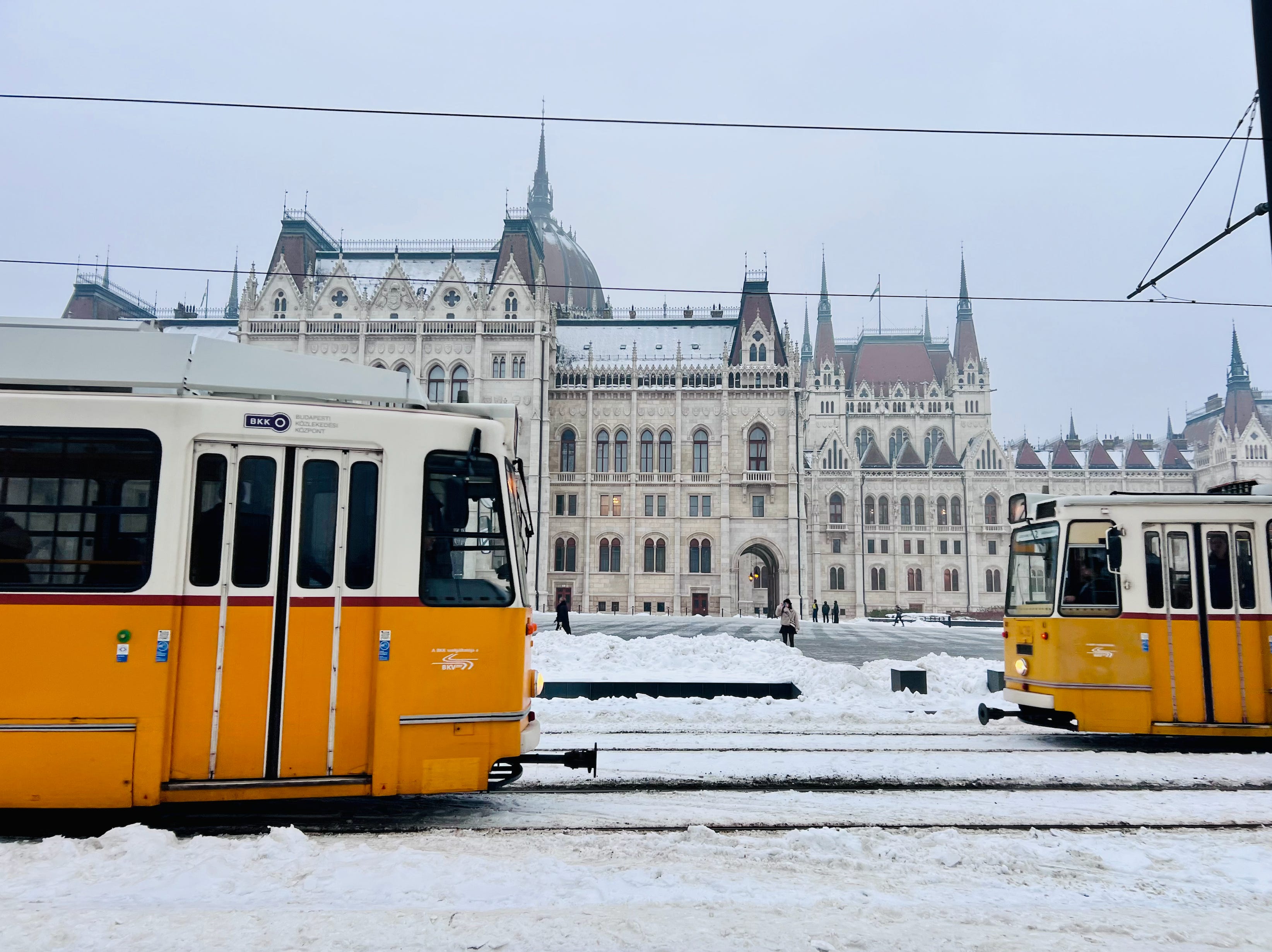
One thing that struck me was how well the city works. Budapest’s infrastructure is a pleasure to use. Buses, trams, trolley buses, trains and metro lines all run smoothly, even in bad weather. Could Transport for London see it, say it and sort it, please? Budapest services are frequent, clearly signposted and sensibly priced. You get on, you get where you’re going, and it’s all remarkably stress-free. Using public transport feels like a civilised activity rather than an endurance test. Carriages are not daubed in graffiti. And more than that, it feels beautiful. Yes, call me a geek, but riding tram line number 2 is beautiful.
Then there’s safety. At any time of day or night, Budapest felt calm, orderly and safe. I expect crime exists, but I didn’t see any, feel threatened or sense an ‘off’ atmosphere. Official figures may fluctuate, but the lived experience of many Londoners and visitors is now one of increased vigilance. Who doesn’t clutch their phone tightly and constantly scan the crowds these days? Budapest feels like a city where you can simply exist without bracing yourself for trouble.
Hungarians, in my experience, are friendly and helpful. Almost everyone we encountered spoke excellent English, yet nearly everyone we met was Hungarian. That might sound like an odd thing to remark upon, but it matters. Sadiq Khan has boasted that one of London’s great strengths is that 300 languages are spoken in the capital. I don’t see this as an unqualified good — quite the opposite. I don’t want to live in, or visit, a modern Tower of Babel. In Budapest, communication is easy, but there is also a strong sense of cultural coherence. As a visitor, it feels welcoming rather than alienating.
There is also a visible pride in the nation and its history. Hungarian flags are displayed everywhere. Shop windows, public buildings and streets are free from the endless rotation of political causes that now dominate London’s visual landscape. No Gaza, Pride or Trans flags, and no political slogans competing for moral attention. Instead, there are plaques and information boards celebrating Hungarian actors, inventors, artists and historical figures. It is delightfully confident and rather lovely. A city that knows who it is and is happy to tell you.
Drivers are extremely courteous, routinely stopping for pedestrians. There is no constant beeping and no explosions of road rage. The roads were much quieter too, as the city is not creaking under millions of new residents.
I saw only one homeless person during my stay, two street performers and one beggar. You’d have clocked that many before passing through a single train station in London. Public toilets, meanwhile, were clean and well maintained. London has become hit and miss on this front and, as for much of the rest of Europe, the least said the better.
All of this contributes to a feeling that Budapest is a high-trust capital city. People dutifully check in on buses and trams using their apps. Rules are followed without resentment. People are cheerful. They seem to like themselves and they seem to like their city.
The main thing? It felt Hungarian. It felt like Budapest. I know why I went and why I would go back. It isn’t an internationalised anywhere place.
This piece is more than a postcard from Budapest. It is a rallying cry for unapologetic patriotism and the celebration of national culture. Depressingly, this now feels increasingly ‘far right’ and radical. If we were to display plaques of famous people in London today, I suspect they would more often celebrate immigrants rather than Britons. That tells its own story about how uncomfortable we’ve become with our own national inheritance.
Hungary has had a turbulent and traumatic past, including 145 years of Ottoman rule and the trauma of the Treaty of Trianon. It is hardly surprising that the country sees itself as a defender not only of its own borders, but of European culture more broadly. That historical consciousness permeates the capital in ways that feel constructive rather than resentful.
Viktor Orbán tweeted recently, ‘We will not allow Hungary to become a country of migrants.’ He also said, ‘Hungary is not leaving the West, we are staying to change it.’ You don’t have to agree with every aspect of his politics to notice the results in Budapest. The city feels coherent, confident and deeply rooted. It may have lost two world wars, but it doesn’t look like it.
Budapest was a lovely place for me to turn 53. If you were being kind, perhaps you’d tell me I don’t look it. And as a city, Budapest is ageing beautifully too. Orbán’s grip on power may not be as decisive as it once was and polls suggest a more competitive political future, but his cultural vision has come of age.
London, by contrast, feels increasingly unsure of itself. Still brilliant in parts, but weighed down by fragmentation, multicultural failure, performative politics and a loss of shared meaning, with talent and wealth emigrating every month. If we want our capital to thrive again, we might do well to look east, to a city that remembers who it is and isn’t afraid to show it.


It sounds delightful Laura. Who will be our Orban I wonder ?
Poland too is wonderful with many poles leaving the UK to go back home because it's so much safer, clean and relatively immigrant-free.
Fabulous Laura, I was planning to go there soon, now might go sooner!