

How climate catastrophism — not climate change — is harming our mental health

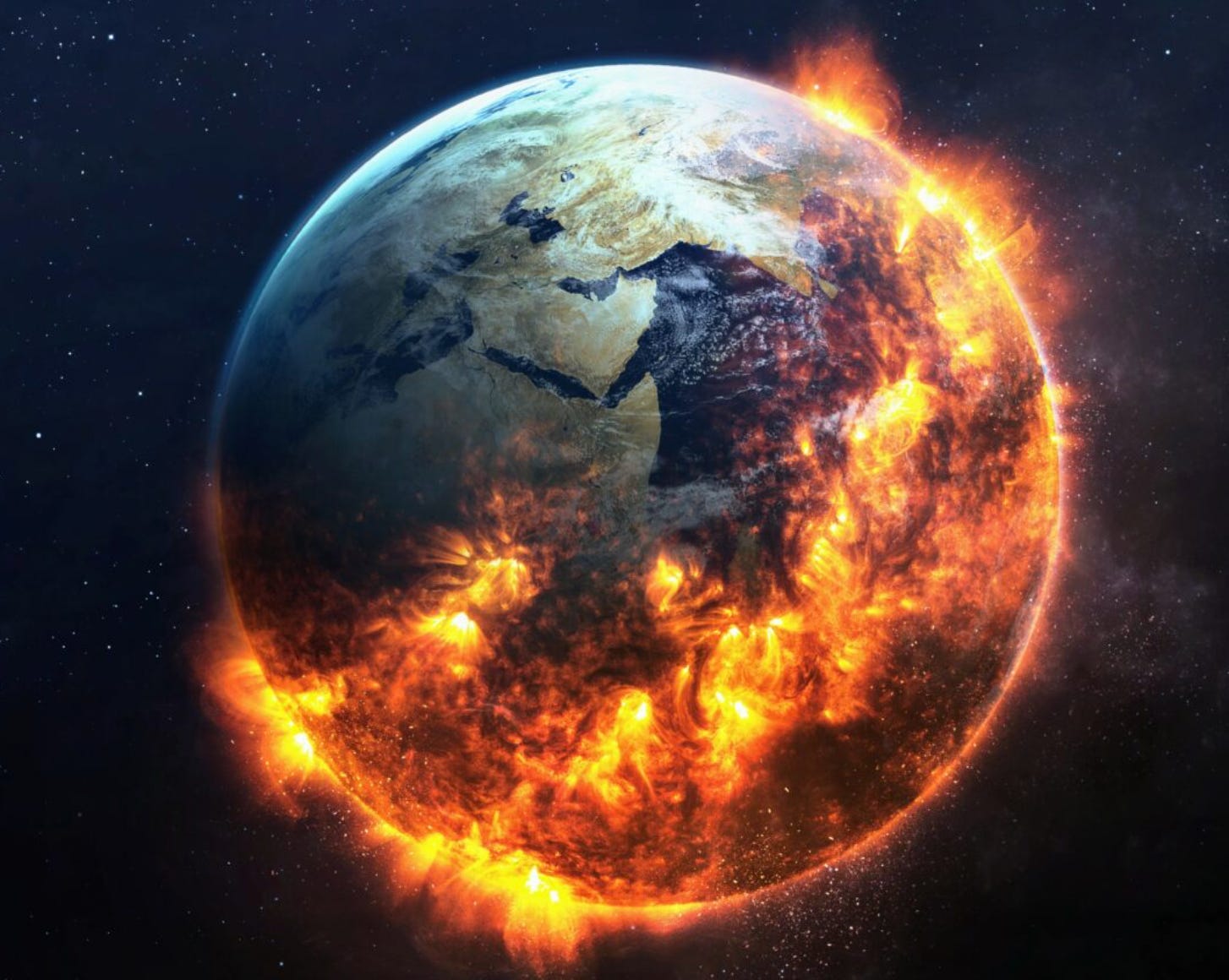
Happy Bank Holiday weekend. I hope you’re making the most of the glorious weather in the UK. Deck chairs out, cold drink in hand, perhaps a book. In my neck of the woods, we’re having the kind of morning that reminds you that life can actually be rather nice.
If only the authorities would let you enjoy it.
As temperatures across England climbed this week, the UK Health Security Agency did not miss the opportunity to issue its first amber heat health alert of 2026, warning that high temperatures “may put vulnerable people at increased risk”. That’s right, this sunny afternoon is a potential public health emergency. Yellow alerts were issued across the North and South West.
The nation must be kept in a perpetual state of low-grade alarm. Heaven forbid you should just pop on the sunglasses and listen to the birdsong.
Climate catastrophism has been running hot — forgive the pun — for decades. The predictions have been vividly apocalyptic yet, with striking regularity, the appointed doomsdays come and go like damp squibs.
While collecting a Nobel Prize in 2007, Al Gore declared Arctic sea ice would be gone “in as little as 7 years”. Nineteen years later, the Arctic ice cap remains. Polar bears missed the fear-mongers’ memo and not only refused to go extinct, their population has roughly doubled since the 1960s. We’ve been told that the world will burn, freeze, turn to desert and drown. It never happens.
But while the predictions fail, the fear machine is in excellent working order.
The persistent deployment of worst-case scenarios as a communications strategy is itself harmful, both psychologically and behaviourally. Here is why:
It produces paralysis, not action.
Research shows that when fear is high but people feel powerless to change anything, the result is not engagement but shutdown. Hopelessness, despair and inaction follow, not the behavioural change campaigners intend.It backfires.
Fear appeals that conflict with people’s lived experience, or that are not paired with clear, achievable solutions, can cause people to switch off, dismiss the message, or double down in the opposite direction.It creates “apocalypse fatigue”.
When every year brings a new deadline that passes without catastrophe, credibility collapses. The boy who cried wolf does not just get ignored — he makes it harder for anyone to raise a genuine alarm.It disproportionately harms the already anxious.
Fear messaging is not received equally. For psychologically resilient people, it may spur mild concern. For those predisposed to anxiety — particularly young people and adolescents — it can be genuinely destabilising.It manufactures the very condition it claims to address.
‘Climate anxiety’ is now recognised as a clinical phenomenon. But is it caused by a changing climate, or by the relentless weaponisation of worst-case scenarios about it?
Points 4 and 5 are endangering people.
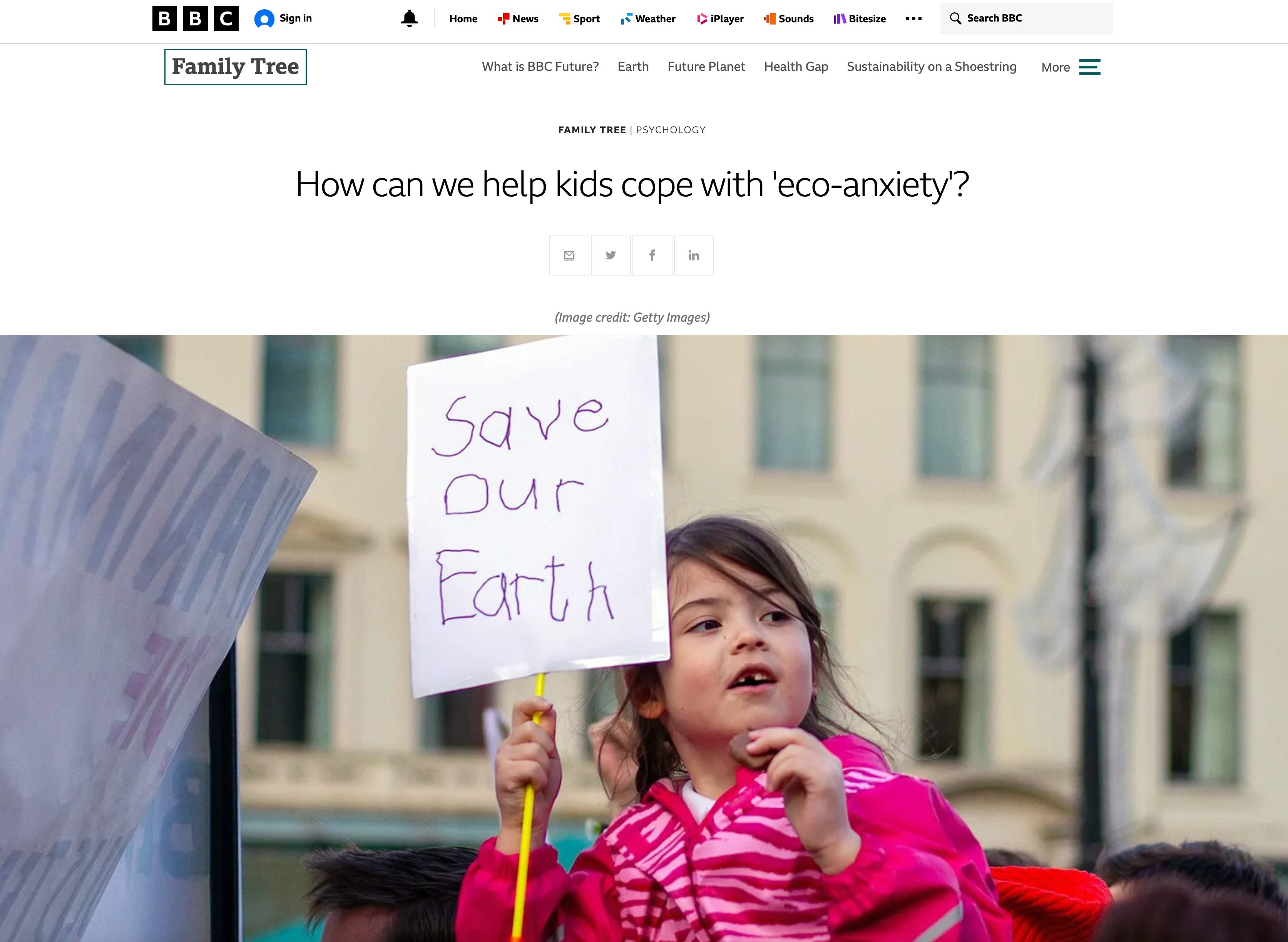
Young minds are relentlessly bombarded with a single, terrifying message: the planet is dying, and it is their responsibility to fix it. A 2025 Yougov survey commissioned by Greenpeace found that 78% of children under 12 are now worried about climate change. But how could they not be? The media hammers climate disaster non-stop. It is woven throughout the school curriculum. Extinction Rebellion has produced videos called “Advice to Young People as They Face Annihilation”. Soap operas are purposefully threaded with eco-panic. One might also ask a rather different question: what does it mean that the survey measuring children’s fear was funded by Greenpeace — an organisation with a direct financial interest in stoking that very fear?
As Sir Humphrey Appleby demonstrated in Yes, Minister, surveys can be crafted to produce the results you want. A study grandly titled “Young People’s Voices on Climate Anxiety, Government Betrayal and Moral Injury” asked respondents only to agree with negative statements such as “the future is frightening” and “humanity is doomed”. No neutral or positive statements were included. If children weren’t frightened at the start of the questionnaire, they probably were by the end.
The Free Mind is independent, unsponsored, and beholden to no campaign, charity, or political party. If you believe in honest thinking over manufactured panic, consider subscribing. It costs less than a coffee and keeps the lights on.
This is a grotesque inversion of the adult-child relationship. Children’s psychological well-being is sacrificed to serve the aims of at best biased and at worst ill-informed and exploitative adults. The fear is created, the fear is polled, and the fear is then used to justify even more fear. It is a sick dog eating its own tail.
‘Climate anxiety’ is now formally recognised as a psychological condition, characterised by persistent fear, grief, and guilt about environmental change. It sits on a spectrum from mild worry to clinical severity. A 2024 study published in Climatic Change found a direct association between climate distress and suicidal ideation, mediated specifically by the feeling of being trapped with no way out. This can result in devastating real world consequences.
In April 2018, David Buckel, a lawyer and environmental activist, set himself on fire in Brooklyn’s Prospect Park. “My early death by fossil fuel reflects what we are doing to ourselves,” he wrote.
In 2021, seven climate activists aged between 18 and 27 — members of Germany’s Last Generation movement — went on hunger strike for 27 days in Berlin. Several were hospitalised. One of them said: “I am very weak, and get dizzy when I stand up. But this is nothing compared to what we can expect when the climate crisis unleashes a famine here in Europe in 20 years.”
A young person, hospitalised from self-starvation, dismissed their own suffering because of a famine they have been told is coming in two decades.
Is that sound political conviction or the product of a mind shaped by unchecked catastrophism?
There are a disturbing number of suicides and hunger strikes by people who are frightened or depressed about climate catastrophe.
This month, the Daily Mail reported the tragic suicide of Georgina Owen, a 21-year-old University of Swansea student described by her family as “vibrant, full of enthusiasm”. Georgina had been following a plant-based diet since 2016 “stemming from her environmental concerns”. In the months before her death in September 2019, she developed serious psychological symptoms. A coroner’s inquest concluded that a vitamin B12 deficiency, brought on by her restrictive vegan diet, played a role in the acute delusional episode from which she did not recover.
Suicide is complex. It is never caused by a single thing, and nothing in this article should be read as a simple or conclusive account of Georgina’s death. Her family have spoken movingly of their grief and of their commitment to research in her memory. But what is worth naming is the pattern: human damage caused by controversial climate claims. In this case, whatever else was a factor for Georgina, it seems that a pincer movement of excessive fear and the resulting dietary choices may have both contributed to her death.
The cruelest irony of climate catastrophism is that it causes catastrophe.
A 2025 study of agricultural producers in Brazil found that those most exposed to climate shocks were less likely to adopt protective strategies, not more. Overwhelmed by fear, they made choices that increased their long-term vulnerability. One farmer put it with terrible simplicity: “The problem is: does he [the farmer] die now, or does he die later? Now, he dies of hunger. Later, he dies of thirst. Right?! He prefers to die later of thirst.”
There is a serious conversation to be had about how human activity affects the climate. That conversation requires honest, proportionate and evidence-based communication. It does not require amber alerts for a warm Bank Holiday. It does not require telling children they are facing annihilation. It does not require hunger strikes and self-immolation as the logical endpoint of decades of escalating terror.
The climate will do what it does. What we choose to do with fear is on us.
If you or someone you know is struggling, the Samaritans are available 24 hours a day, 7 days a week, on 116 123 — free, confidential, and always there.
Share this piece if you know someone who needs to hear it!
Tony Benn once said that governments have two ways of controlling people: fear and demoralisation. What the pandemic showed is that fear works best with demoralisation a natural concomitant anyway.
This timely article is a good reminder that 'project fear', or projects fear in fact, is now the preferred method across a range of subjects. Vested interests wanting to ensure continuing profit from green technology, ramp up a project fear about a climate catastrophe. Labour party losing votes, ramp up fear of the 'far-right'. The country is awash with Nazis aome of whom are "literally Hitler". Jeez. I live in this awful country that is destroying the planet all by itself.
It is getting tiresome to say the least. But, the harm to our children is unconscionable.
"Of all tyrannies, a tyranny sincerely exercised for the good of its victims may be the most oppressive. It would be better to live under robber barons than under omnipotent moral busybodies. The robber baron's cruelty may sometimes sleep, his cupidity may at some point be satiated; but those who torment us for our own good will torment us without end for they do so with the approval of their own conscience. They may be more likely to go to Heaven yet at the same time likelier to make a Hell of earth. This very kindness stings with intolerable insult. To be "cured" against one's will and cured of states which we may not regard as disease is to be put on a level of those who have not yet reached the age of reason or those who never will; to be classed with infants, imbeciles, and domestic animals.”
― C.S. Lewis, God in the Dock: Essays on Theology (Making of Modern Theology)
The trouble is: a lot of people now use the climate narrative as a way of virtue signalling and gaining status, while many others are afraid to demur because of implications for their careers. Like the whole Diversity industry, it has acquired a whole corrupt life of its own, quite apart from any questions of its credibility or ultimate helpfulness. So, I think we really just need more people saying No, I don't believe that, and refusing to dance along to the music. Trying to persuade people by reason and facts alone simply will not work in most cases.