


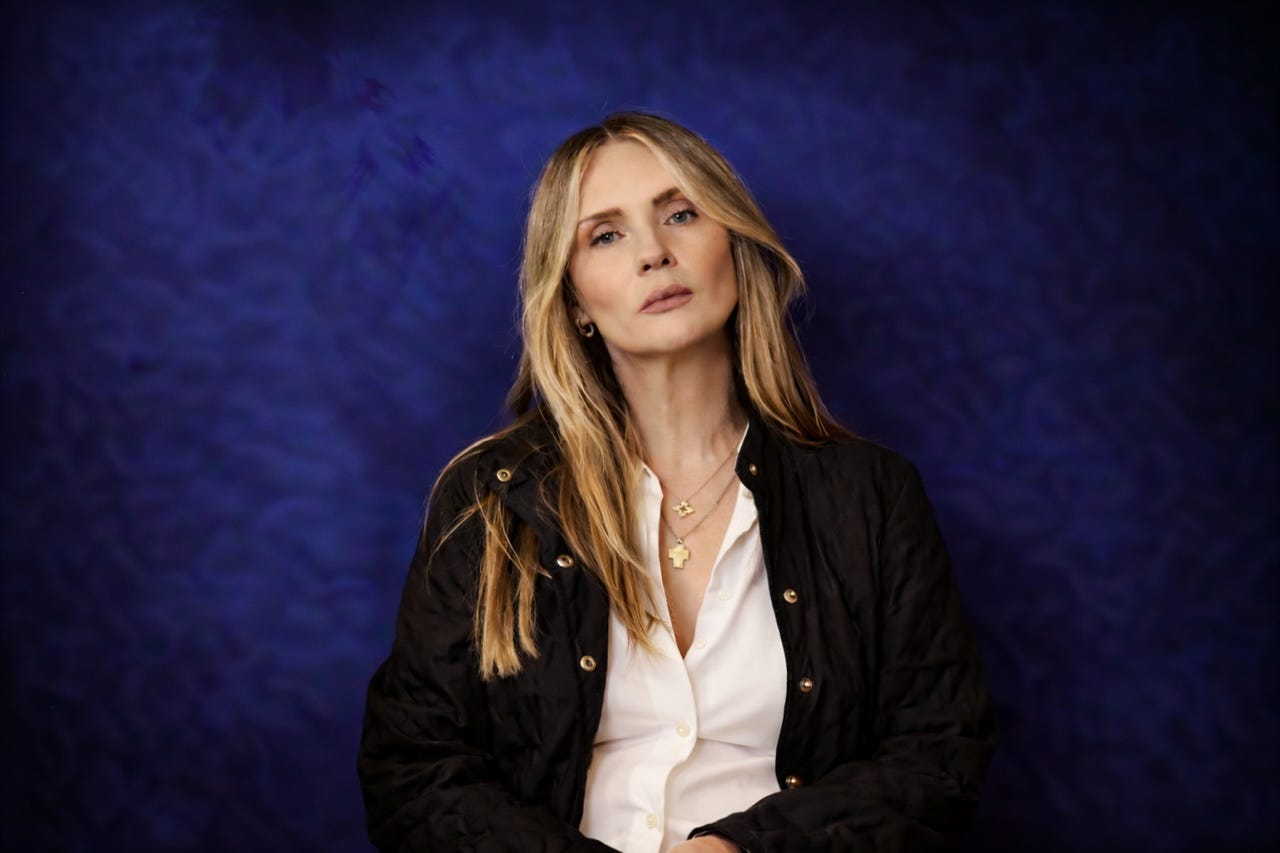
Bernie Spofforth is a British entrepreneur and writer with more than three decades of international experience building, scaling and leading companies across consumer goods and technology, IP and patents. A War to Win Back Your World is her first book.
This is the first book you have written. Tell me about your process: how you approached the task of researching and writing, what fact-checking the book has been through, and whether you enjoyed it?
Partly down to making sure I never ever got a detail wrong again, the book actually went down in skeleton form very quickly and the subjects I knew well were fleshed out easily because I had already done much of the research, things like Net Zero, the WHO and where the money was going were easy for me. Once I had the skeleton and I knew where we were headed economically, I started to trace back the routes of control and propaganda. I could trace factually lots of the detail we are being fed today to early modelling programmes that are not science! They are fallible systems and from there it was easy to see where the mistakes — and yes, I think often they are mistakes — had come from. I then understood as a businessperson how every mistake could be an opportunity and then where the money was flowing. My big overriding drive through the book was always the same — did the people choose this and were they ever asked.
Can you tell me about your career before you wrote this book?
I’ve been in business for 30 years, I fell into my first role after I moved back to the UK from South Africa. I wanted to study law but I couldn’t really understand the university entrance system and didn’t believe I was able to get funding and if I couldn’t then how did I pay for it, so I just walked my way into a job. I said I spoke Dutch. I don’t but figured it was pretty close to Afrikaans (which incidentally I can’t speak very well either) but thought I could wing it. And then I was just really good at my job. It was trading fast moving computer components against multiple currencies, literally shifting stocks in over supply to places where they were in under supply. I was really good at it. I set up a company with a partner after that with backing from US money men and that company floated on Nasdaq in my late 20s. Since then, I have set up or helped run or indeed run myself lots of companies for investors, private equity etc. Usually in consumer goods but not exclusively. It means that I have a keen insight into costs, management, geo politics, profits, exits, regulations and IP over lots of different areas of business, from services to physical product. I also fitted in 3 children.
Some people might recall your name from the news around the Southport murder and subsequent protests. You tweeted:
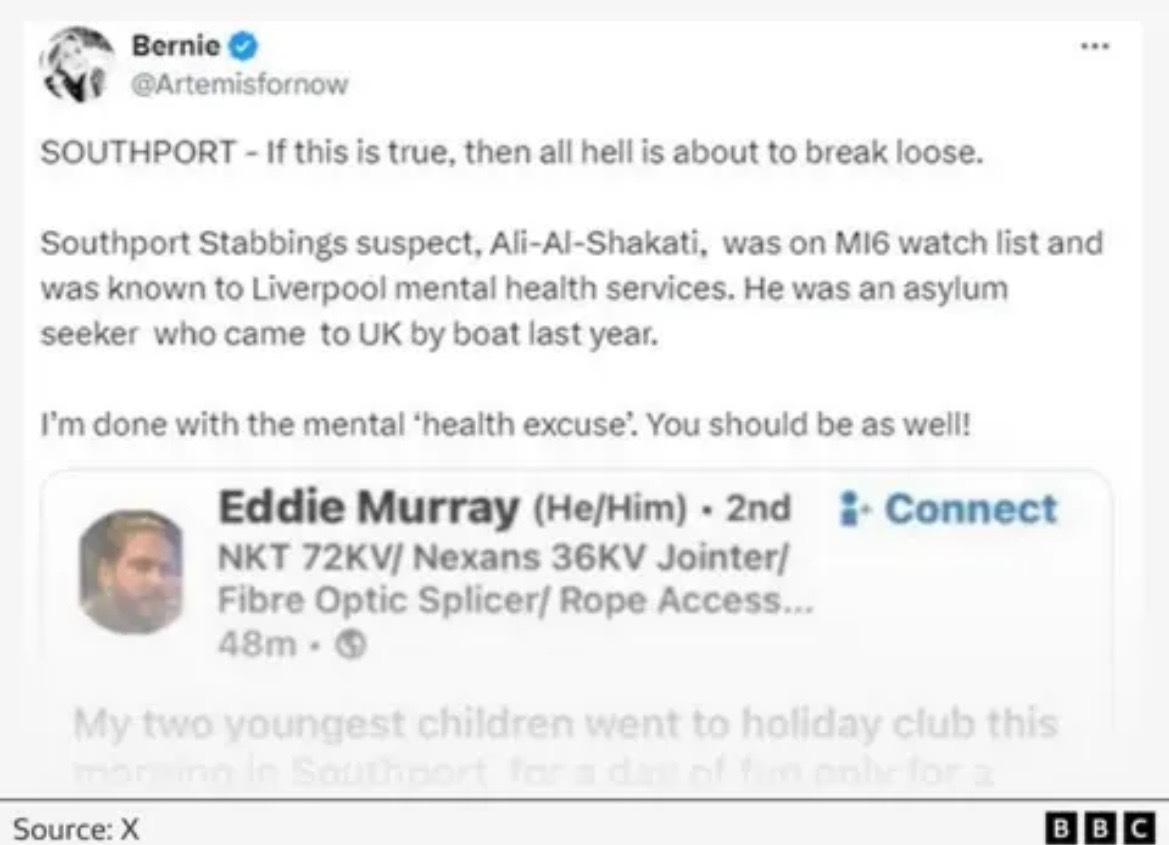
In your new book, you describe what happened to you next. Can you please tell my readers in a nutshell.
It took me a long time to process what happened to me and how quickly an arrest can destroy 30 years of your life. Which it did. I worried terribly that the only thing I would ever be remembered for was that. I detail exactly what happened in the Prologue. It feels surreal now, as if my brain can’t quite process it as me. Like an out of body experience rather than an in body one. And I have huge respect for those people who don’t care when they are arrested and are incredibly brave about it. But for me it was the most shameful and degrading thing that has ever happened to me.
Your description of arrest and being in a cell for 36 hours was gripping. I had the feeling you might be holding more about this experience back. Am I right?
Yes, but there is a live police case currently and I can’t add to what I wrote in the prologue. I can explain it though, it’s like everything happened as if it was a freeze-frame or like a staccato piece of music. What I mean by that is that every second felt like a camera flash and I tried to remember every bit of it, to commit it all to memory almost as a photograph and that’s how I had to write it because that is all I remember, just those clear photographs my brain took.
The opening sentence of the book is startling:
“Every year in Britain, around 12,000 people are arrested for the things they post online.”
This is a great opener but a horrible fact. Would it be fair to say that your book basically explains how we got here?
Yes, that’s what I hope people discover and then understand. It has taken 50 years to get to where we are, and it will take more than one democratic cycle to get us out of it. The book is very detailed because when you have been accused of misinformation you can’t afford to put a foot wrong. I think people need to deeply understand how entrenched we are, who owns us, who profits from us, the unaccountable organisations often directing or influencing governments and we ourselves have helped to get here. Now people may disagree with my conclusions, they may even agree with what is being done, my point is that we have never been asked.
Please could you give me three points you would like people to take away from this book?
Things are much worse than you think.
Changing the party probably can’t change the direction.
Life as you knew it will never be the same again.
That’s depressing! I think you will inevitably be described as a conspiracy theorist by some critics. What would you say to that?
I don’t know how anyone who has read the book could come away with that conclusion, mostly because there are so many citations but also because I debunk many conspiracy theories along the way. Let’s be very clear, I didn’t have a destination when I started writing, if I had found something different, I would have written it. People can disagree with my conclusions; they can decide that what is happening is great for all mankind. My argument is simple: if it’s so great for the majority in the UK why won’t they let you choose? I think those who call me a conspiracy theorist simply haven’t read the book.
You make the case that decision-making power has gradually shifted away from voters and elected governments toward interconnected global institutions, private foundations, and policy networks. If that is the case, then what can the reader do?
It’s so depressing isn’t it and yes, I do say that in the book. The first and most important rule is to have knowledge, and we know that is an enemy of most governments. They talk about transparency whilst smothering truth all the time. The second important thing people have to do is decide. Do they want convenience and ‘safety’ and to be poor? Or do they want freedom and choice and to be poor. Because poorer is what will happen to the overwhelming majority of the population over the next 20 years. There is no way out of a situation which shows the workforce to be shrinking, debt growing and the population ageing. For me the most important thing people can do is face the truth and then make a choice. The problem is that I don’t think people will get a choice. During Covid we were told there were five percent of the population who were Refusiniks, we have since found out the percentage was far larger than that. In this instance I would say it’s larger again, but when these people are faced with a stark choice, I’m not so sure they will be on the side of freedom. Over half of the UK gets benefits of some kind from the government. To break from the system will be 15 – 20 years of terrible hardship. Most people will not vote for that. Unless they do then the direction of travel cannot be changed.
In the course of your research, what surprised you the most?
Surprised or just quietly disappointed? I had hoped to find 5 blokes in a room smoking cigars like Bond baddies taking over the world. Disappointingly that wasn’t the case, it was far more mundane. It really was overreaching mission creep, lazy and incompetent national governments, a lean to the hard left after the war and ridiculous ideology within institutions which allowed global business to take advantage for their own benefit. Now that’s not to say the modern philosophers are wrong and drugs and video games won’t keep us happy, but they are philosophers and not businesspeople. You see with a shrinking consumer base they too will have lower income; the more AI replaces jobs the fewer people will be able to afford their products and services, so it’s a shrinking market with an increasingly unskilled human race. How could that ever benefit the majority?
What is your proudest and most important achievement?
I’m supposed to say having children right? And of course I am very proud of them. I’m honestly not proud of anything I have ever done. I have always tried very hard to do my best. Perhaps the best I can say is that in my entire career I don’t believe I didn’t try.
Describe your biggest epiphany and how it shaped you?
That I could be caught up in the madness and arrested for a genuine mistake, that I could prove was a mistake easily, but that the system wanted me shut down and imprisoned. I knew then that justice was simply an illusion, so that people believed we had a robust system. I naively bought into all of that, thinking that if you were a good person then you would be ok. The research into the book and my own experience showed me that wasn’t the case at all. In fact, I am probably now just a *tut* that they couldn’t ‘get’ me. I think they are probably irritated that I was completely innocent of what they accused me of, I was an inconvenience that they got wrong.
If you were an absolute monarch for a day, what law would you introduce?
That NO law, framework or agreement could be signed that would impact the delivery of any party’s manifesto. I would have many subsections to this law which would include, if any manifesto promise is broken a General Election is called and if the manifesto the majority voted for is not delivered by the end of the term, then criminal charges are brought against the PM. That should focus attention away from unaccountable international institutions and agreements and back onto the public and what they want. Now, I’m not saying the majority are always proved right, I’m not saying democracy always gets it right and we don’t mess up. I’m saying that in order to put things right people need to understand and take responsibility for what they voted for and get it right next time.
What is next for you?
I don’t know. I think my career in industry is over. I can’t work in a world which refuses to do what’s right in favour of doing what will be easy. That’s not for me. I joined all the dots for people, there are many books written on some of the subjects individually but none encompassing the entire plan, the money, who benefits and the very real consequences, so I’m not sure I have anything left to write either — I can’t have been more thorough. But for now maybe I’ll just try and focus on giving politicians a hard time.
A War to Win Back Your World published 26th June 2026 is to available pre-order now, £16.99, from all good bookshops and online.

Had to look Bernie up to see what her tweet said and it is shocking that she got arrested for it, especially as she said "if it is true" but even without it she should not have been arrested. Clearly the establishment are terrified that a significant part of the population are seething and ready to explode. I suspect they are right and that they will. It is going to be very painful!
''The most terrifying words in the English language are 'I'm from the government and I'm here to help you'''.....Ronald Reagan.